Why Pet Weight Loss Fails: A Cost-Smart Guide for Dogs and Cats
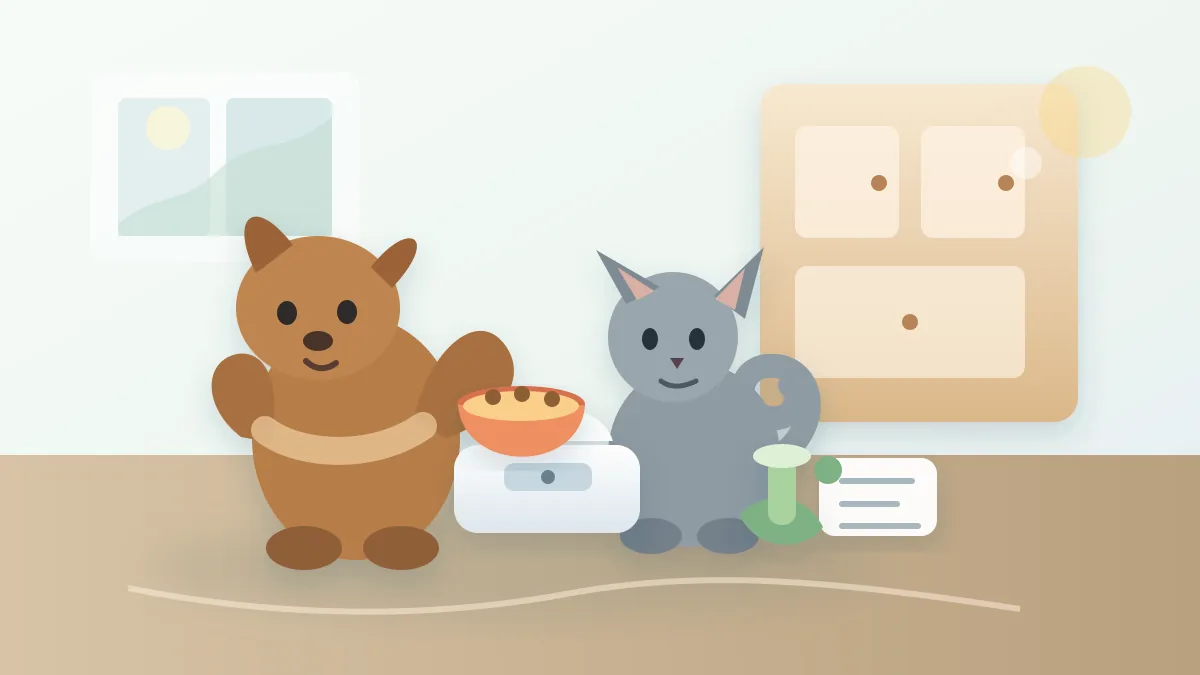
Many pet weight-loss plans do not fail because the dog or cat is stubborn.
They fail when the refrigerator opens.
They fail when a child drops a piece of chicken on the floor.
They fail when one person in the house says, "Just this once," and hands over a treat.
They fail when everyone thinks they are feeding "about the right amount."
About.
That word is where a lot of pet diets quietly fall apart.
It is also where many owners waste money. Weight-control food, low-calorie treats, smart feeders, supplements, and online hacks can all sound useful, but without a body condition score, a food scale, and follow-up weights, buying more does not always help more.
Dogs and cats are small compared with us. A little extra food from a human perspective can be a meaningful amount for them. What feels like love in the moment can become extra strain on joints, less interest in moving, and a body that has to work harder every day.
So pet weight loss is not really a willpower problem.
It is a household systems problem.
Start With Body Condition, Not Just Pounds
Many owners start with a number.
My cat weighs 14 pounds.
My dog weighs 35 pounds.
That number matters, but it does not tell the whole story. A 35-pound dog may be lean for one breed and overweight for another. A 14-pound cat may be large-framed, overweight, under-muscled, or some combination of all three.
That is why body condition score matters.
The 2021 AAHA Nutrition and Weight Management Guidelines describe weight, body condition score, and muscle condition score as core parts of nutritional assessment, ideally performed at veterinary visits. Source: AAHA: 2021 Nutrition and Weight Management Guidelines Executive Summary
In plain English, the scale is not enough.
Can you feel your pet's ribs without pressing hard?
Is there a visible waist from above?
Is there an abdominal tuck from the side?
Is your older pet carrying fat while also losing muscle?
That last one matters. Some senior pets look round but are also losing muscle. If the only response is "feed less," the plan can miss something important.
The safest first step is not buying a new diet food.
It is asking your veterinarian what your pet's body condition, muscle condition, health status, and realistic target should be.
Why "I Feed Less" Often Does Not Work
Many owners reduce the main food.
But the main food is not the whole diet.
There is kibble.
Wet food.
Freeze-dried toppers.
Training treats.
Dental chews.
Table scraps.
Peanut butter, cheese, or deli meat used to give medication.
And, in multi-pet homes, whatever gets stolen from another bowl.
Each item may feel small. Together, they can erase the calorie reduction you thought you made.
AAHA lists non-complete-and-balanced foods that exceed 10% of daily calories as a nutritional risk factor, including commercial treats, table food, chews, and foods used for medication. Source: AAHA: Nutritional Risk Factors
This is one of the most common reasons pet diets stall.
The owner cuts back the kibble.
The treats stay the same.
The chew sticks stay the same.
The "tiny bites" from dinner stay the same.
The pet feels restricted. The human feels like they are trying. But the total intake barely changes.
Annoying, yes.
Also very normal.
The Scoop Is Usually Lying to You
Another problem is the food scoop.
A label may say one cup, but homes contain many different "cups." One person levels it. Another gives a rounded scoop. Someone else packs the kibble down without realizing it. Different kibble shapes and densities can change how much food actually lands in the bowl.
For a pet who truly needs weight loss, the most useful tool is often not a fancy gadget.
It is a kitchen scale.
Weigh the daily amount.
Divide it into meals.
Make sure everyone in the house feeds from the same measured total.
If you need training treats, account for them within the daily plan or ask your veterinarian about safer lower-calorie reward options. Do not create a separate "treat universe" outside the plan and then wonder why the plan is not working.
AVMA's healthy weight materials also remind owners that food is not the only way to show affection. Play, attention, touch, and time together can all be rewards. Source: AVMA: Your Pet's Healthy Weight
That sounds almost too simple.
But for many homes, it is the real change.
Sometimes the pet does not need another snack.
Sometimes they need five minutes of your attention.
If the Family Rules Leak, the Diet Leaks Too
Pet weight loss is like carrying water in a bag.
One hole is enough.
One person weighs every meal carefully.
Another person adds food because the pet looks sad.
One person says no treats today.
Another person gives a dental chew after a short walk.
The pet is not confused.
The pet has learned who is most likely to say yes.
Before starting a weight-loss plan, the whole household needs a small agreement.
Who measures the food?
Who feeds which meal?
Where do allowed treats come from?
What does everyone do when the pet begs?
One simple trick is a daily treat container. Everything allowed for that day goes in the container. When it is empty, treats are done. Not because you love your pet less, but because love cannot be measured only in snacks.
That may sound strict.
But for an overweight pet, the kinder choice may be helping them walk more comfortably, breathe easier during activity, and put less stress on their body.
Exercise Helps, But It Does Not Cancel Extra Food
More walking can help many dogs.
More play, food puzzles, climbing, and chasing can help many cats.
Activity supports calorie use, preserves mobility, and gives pets something to do besides begging for food. Some pets ask for food partly because they are bored, under-stimulated, or used to food being the main interaction.
But exercise cannot reliably cancel casual overfeeding.
A short walk followed by a large treat may undo the point. A three-minute play session followed by a pile of freeze-dried rewards can do the same.
A more realistic plan combines measured food with activity that matches your pet's body and health.
Not starvation.
Not "just run more."
If your pet has joint pain, breathing issues, heart disease, diabetes, frailty, or obvious discomfort with activity, ask your veterinarian before changing the exercise routine. Weight loss should not create a new injury.
Cats Need Extra Caution
Cats deserve their own warning here.
Cats are not small dogs.
Cornell Feline Health Center notes that feline weight-reduction programs should be carried out with veterinary guidance and warns that sudden starvation diets can create serious health risks such as hepatic lipidosis. Source: Cornell Feline Health Center: Obesity
So do not abruptly cut a cat's food in half.
Do not assume a cat will "eat when hungry" after a sudden diet change.
Do not remove food in a multi-cat home without confirming each cat is actually eating the right amount.
Cat weight loss should be gradual, tracked, and supervised. The goal is to lose excess fat while protecting muscle and overall health.
If a cat stops eating, seems weak, vomits, becomes yellow around the eyes or gums, or loses weight quickly, do not keep experimenting at home. Call a veterinarian or emergency animal hospital.
A Safer Pet Weight-Loss Process
If you want a plan that can actually work, start in this order.
First, get a baseline veterinary check.
Ask about body condition score, muscle condition score, current weight, realistic target range, pain, medications, age-related changes, and any condition that could affect weight. AAHA notes that higher-than-ideal body condition, muscle loss, or unexplained weight change should trigger deeper nutritional assessment. Source: AAHA: Nutritional Risk Factors
Second, write down everything your pet eats.
Not just the brand name.
Record kibble, wet food, treats, chews, table food, medication foods, supplements, toppers, and who feeds what. The more specific the list, the easier it is to find the leak.
Third, weigh food instead of guessing.
Measure the daily amount. Count treats within the plan. In multi-pet homes, separate feeding may be necessary, at least during weight loss, so you know who ate what.
Fourth, set a follow-up rhythm.
You may track weight at home weekly or every couple of weeks, but the exact pace, target, and adjustment plan should come from your veterinarian. AVMA recommends setting realistic goals with your veterinarian and monitoring progress. Source: AVMA: Your Pet's Healthy Weight
Fifth, when progress stalls, troubleshoot before blaming yourself.
Was the food weighed correctly?
Were treats counted?
Is someone adding food?
Did activity drop because of weather, pain, or schedule?
Is your pet stealing food from another bowl?
Does the veterinary plan need adjustment?
Pet weight loss is not one piece of paper.
It is a feedback loop.
Try, measure, adjust, repeat.
Move Some Love Out of the Bowl
This may be the hardest part.
Many owners overfeed because they care.
The dog looks at you.
The cat rubs your leg.
The pet sits near the bowl as if life has become deeply unfair.
It is easy to give in.
But pets do not understand long-term risk. They understand the snack in front of them. The human has to protect the long-term outcome.
You can reward with a walk.
With brushing.
With play.
With a puzzle feeder.
With a measured portion of the day's food used for training.
With five minutes of attention instead of one more bite.
The love is not gone.
It has just moved from the bowl into the relationship.
Bottom Line
Dog and cat weight loss usually does not fail because pets are lazy, greedy, or impossible.
It often fails because the human system is loose.
No body condition assessment.
No weighing.
No treat tracking.
No household agreement.
No follow-up.
No adjustment when the plan stalls.
A safer weight-loss plan is quieter and more practical than most people expect: get veterinary guidance, assess body and muscle condition, list every calorie source, weigh food, agree on household rules, add appropriate activity, monitor progress, and adjust.
It is not flashy.
It is not instant.
But many effective pet health changes look exactly like this: one measured meal, one counted treat, one short walk, one consistent family decision at a time.
This article is for general pet health and care information only. It is not veterinary diagnosis, treatment, or an individualized nutrition prescription. Weight-loss plans for dogs and cats should be based on age, breed, body condition, muscle condition, medical history, and current medications, with help from a veterinarian or qualified veterinary nutrition professional. If your pet stops eating, loses weight rapidly, vomits, seems depressed or painful, has breathing changes, develops yellow eyes or gums, drinks or urinates much more than usual, or makes no progress despite a careful plan, contact a veterinarian or emergency animal hospital.
Related Financial Decisions
Keep using the same cash-flow lens on related decisions.
Are Smart Pet Devices Worth It? Smart Litter Boxes, Pet Cameras, GPS Collars, and Cost-Smart Choices
Smart litter boxes, pet cameras, GPS collars, feeders, and fountains can be useful, but they are not right for every household. Learn how to weigh health signals, privacy, subscriptions, maintenance, and veterinary limits before buying.
petIs Bad Breath Normal in Dogs and Cats? Pet Dental Care and Cleaning Costs
Bad breath in dogs and cats may point to plaque, tartar, gingivitis, periodontal disease, pain, or infection. Learn how brushing, VOHC products, anesthesia dental cleanings, and cost estimates fit together.
petHow to Choose Dog and Cat Food Without Overpaying: AAFCO and Label Basics
Pet food prices and marketing claims can be overwhelming. Learn how to read AAFCO statements, complete and balanced claims, life stages, calories, feeding directions, treats, toppers, and veterinary diets before paying more.
SmartLiving Tools
Keep running the numbers with free practical tools.