Leftovers Are Not Automatically Safe: Remember the 2-Hour Rule
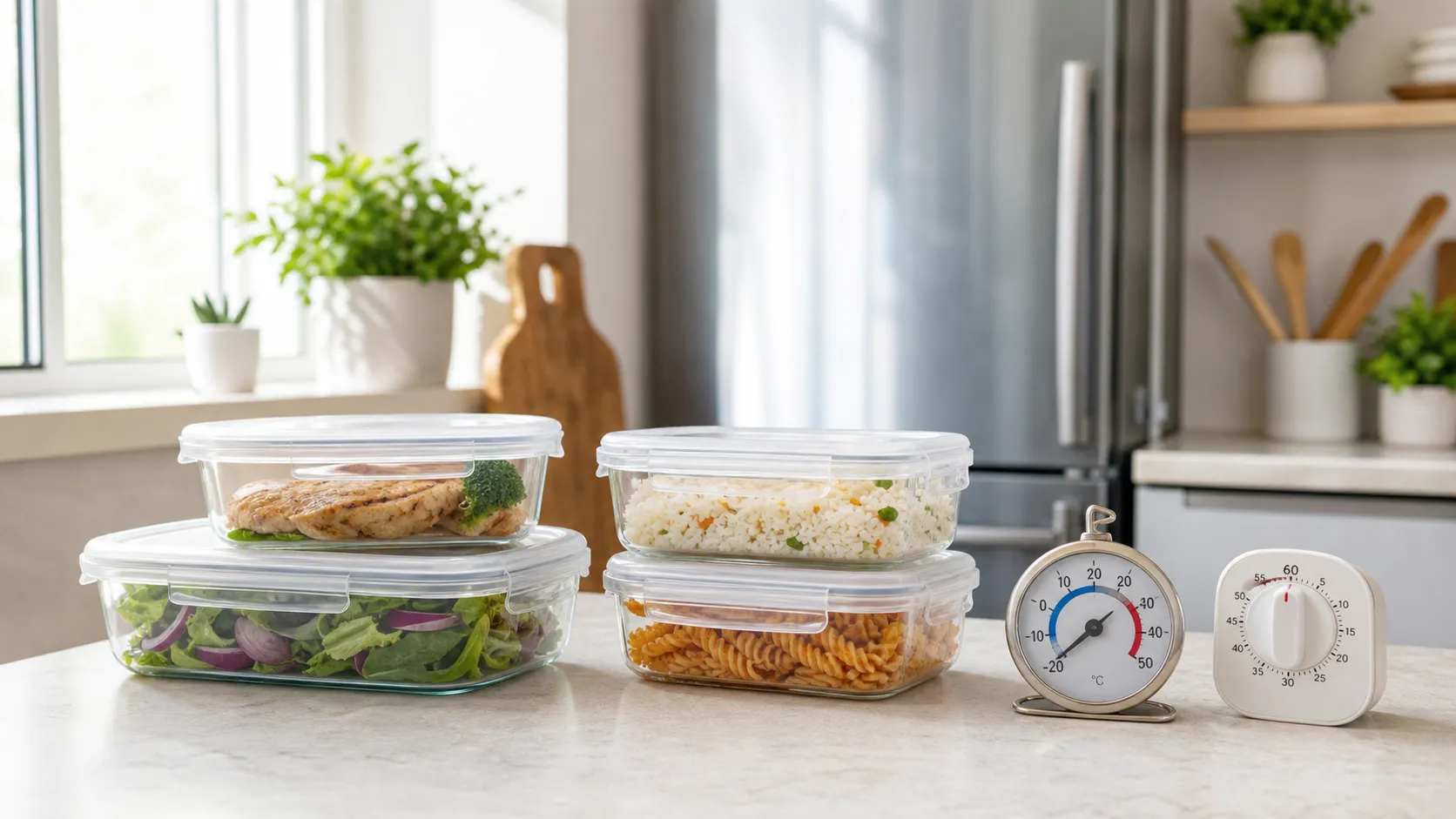
Many households have the same routine: dinner ends, the food stays on the table, the dishes get washed, and the leftovers finally make it into the refrigerator much later. It feels harmless, but from a food safety perspective, that delay can matter.
USDA/FSIS describes the temperature range between 40°F and 140°F as the food safety “Danger Zone.” In that range, bacteria can grow quickly. The practical rule is simple: perishable food should not sit at room temperature for more than 2 hours. If the surrounding temperature is above 90°F, such as in a hot car, an outdoor cookout, or a kitchen without air conditioning, the limit drops to 1 hour. Source: USDA/FSIS Danger Zone
This applies to cooked meat, seafood, eggs, dairy, rice, pasta, soups, takeout, and dishes that contain meat or dairy. Smell is not a reliable safety test. Food can look and smell normal and still carry risk.
The better habit is to portion leftovers soon after eating. Do not put a large pot of soup or a deep tray of food directly into the refrigerator and assume it will cool fast enough. Large containers cool slowly, especially in the center. Shallow containers and smaller portions chill faster and are easier to reheat later.
Refrigerator temperature also matters. USDA guidance is to keep cold food at 40°F or below, while hot food that is being held should stay at 140°F or above. A simple refrigerator thermometer is often more reliable than guessing from the appliance dial. Source: USDA/FSIS Safe Handling of Take-Out Foods
Practical Checklist
First, do not leave leftovers on the counter for more than 2 hours.
Second, use the 1-hour rule in hot weather or outdoor settings.
Third, divide large portions into shallow containers before refrigerating.
Fourth, reheat leftovers thoroughly before eating.
Fifth, when you are not sure how long food has been out, or it smells or feels unusual, throw it away.
This article is for general household information only and does not replace professional food safety, medical, or nutrition advice.
Related Financial Decisions
Keep using the same cash-flow lens on related decisions.
Revenue Grew. Why Did Operating Profit Fall? An Income Statement Walkthrough
Learn gross profit, operating income and net income with a fictional food business, then reconcile P&G's 2026 results. Includes worked calculations and two practice questions with answers.
financeShould You Break a CD After a Fed Rate Hike? Calculate the Switching Cost
A higher CD rate may not cover the early withdrawal penalty. Compare a $20,000 example over the same six months, calculate the break-even rate, and avoid APY and brokered-CD mistakes.
finance2026 Trump Account Guide: The $1,000 Child Savings Account vs. a 529 Plan
Trump Accounts are live. This 2026 family finance guide explains who may qualify for the $1,000 federal contribution, whether parents should add more money, and how Trump Accounts compare with 529 plans.
SmartLiving Tools
Keep running the numbers with free practical tools.