Dog Separation Anxiety Costs: Damage, Daycare, and 30-Second Training
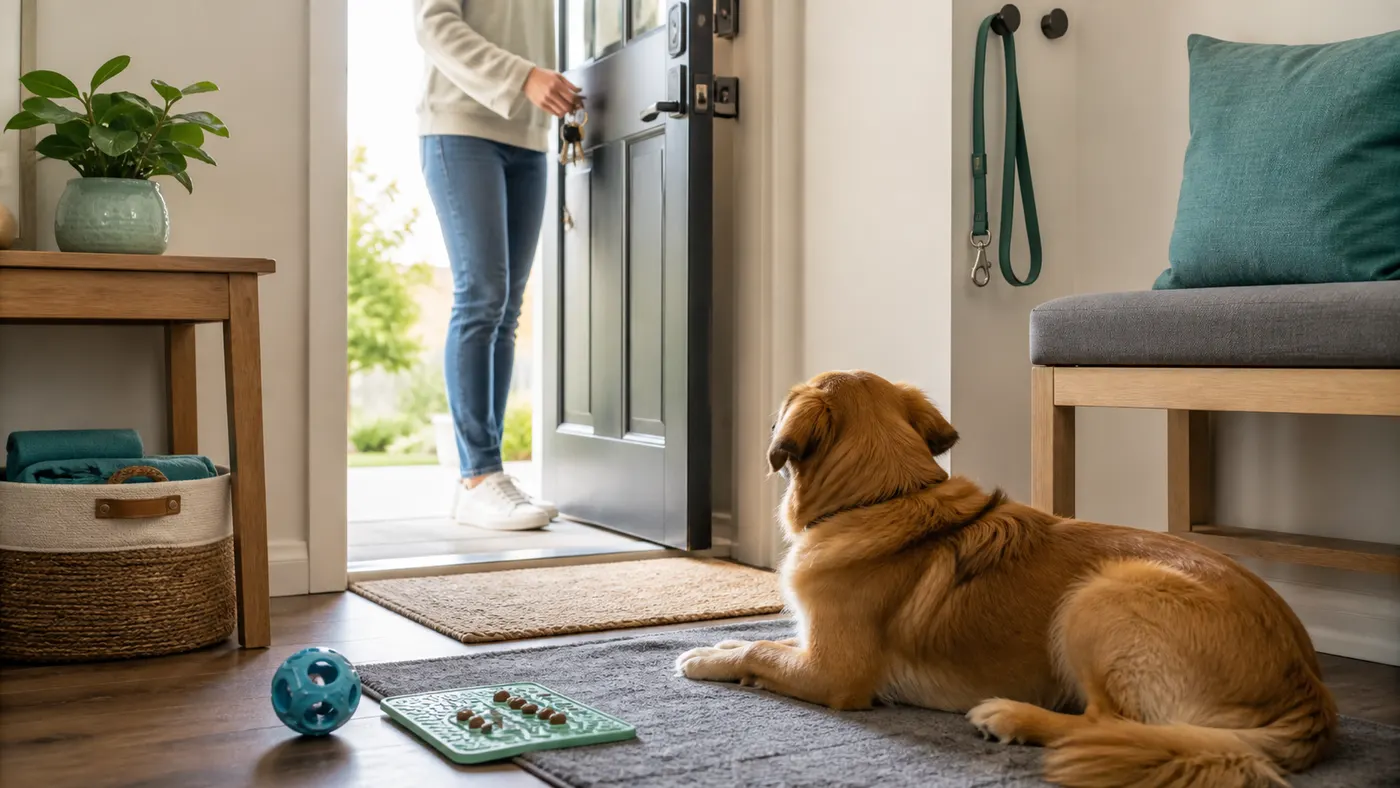
Many dog owners do not realize separation anxiety is a real problem until someone else tells them.
A neighbor texts: your dog has been barking all morning.
You come home and the door frame is chewed, the couch cushion is shredded, and there is drool on the floor.
This is a behavior problem, yes.
But it can become a money problem quickly: repairs, cleaning, neighbor complaints, dog daycare, pet sitters, training sessions, and missed work hours all add up.
So this guide is not only about making a dog behave.
It is about using smaller training steps to keep both your household and your dog from sliding into an expensive stress loop.
Or you pick up your keys, and your dog immediately starts pacing, panting, following you, and looking like the world is about to end.
It is easy to think, "Is my dog doing this on purpose? Is he just too clingy? Should I let him cry it out?"
That is where separation anxiety gets misunderstood.
It can look like bad behavior.
But for many dogs, it is panic.
Boredom, Puppy Behavior, or Separation Anxiety?
Not every destroyed tissue box means separation anxiety.
A young, energetic dog who gets little exercise, little sniffing time, and no enrichment may chew things because they are bored. Puppies may mouth and chew because they are exploring or teething.
But if the behavior happens mainly after you leave, especially near doors, windows, shoes, clothing, or escape points, and it comes with long barking, howling, drooling, panting, pacing, scratching, or attempts to escape, it may be separation-related anxiety.
A 2025 U.S. pet owner survey reported that 61% of respondents listed separation anxiety as their top behavioral concern, and 72% were at least somewhat concerned about their pet's anxiety or stress when left alone. Source: dvm360: Pet anxiety tops list of caregiver concerns
This is not a weird problem that only happens to a few people.
Many owners are dealing with it quietly.
First: Do Not Punish Panic
If a dog is already panicking, punishment usually makes the problem worse.
Of course it is upsetting to come home to damage. Anyone would feel frustrated after seeing a chewed door frame or destroyed sofa.
But your dog is not likely to connect your anger now with something that happened three hours ago. What they may learn instead is that your return is also scary.
AVSAB's Humane Dog Training Position Statement supports reward-based training and warns against methods that create fear, pain, or stress when addressing behavior problems. Source: AVSAB: Humane Dog Training
This is not about spoiling your dog.
It is about recognizing what anxiety is.
You cannot scare a dog out of panic.
Break "Leaving" Into Tiny Pieces
Many owners want to train their dog to stay home alone for four hours.
That is too big at the beginning.
For a dog who already panics, four hours is not a training step. It is a repeat of the worst part of the day.
Training often starts much smaller:
Pick up your keys, but do not leave.
Put on your shoes, then sit back down.
Pick up your bag, walk to the door, then return.
Open the door for one second, then close it.
Step outside for three seconds, then come back.
If those small actions already make your dog anxious, that is where training starts. Not with an eight-hour workday.
ASPCA notes that mild separation anxiety may be addressed through counterconditioning, helping a dog associate being alone with good things. It also discusses working with departure cues so keys, shoes, and bags do not automatically trigger panic. Source: ASPCA: Separation Anxiety
It sounds slow.
But slow is often the fastest safe path.
The 30-Second Training Idea
People often ask, "How many minutes should I start with?"
I would not start with minutes.
Start with your dog's emotional state.
If your dog can stay relaxed for 30 seconds, 30 seconds may be a good starting point. If your dog starts barking, panting, or scratching after 10 seconds, start with five seconds.
A simple practice session can look like this:
First, choose a time when your dog has eaten, gone for a walk, and is relatively calm.
Second, prepare a safe chew, puzzle toy, or lick mat.
Third, do a very short departure, such as stepping outside for 5 to 30 seconds.
Fourth, return before your dog melts down.
Fifth, keep your return calm. Do not make it a dramatic reunion.
Sixth, repeat a few times and stop before your dog gets overwhelmed.
The point is to help your dog experience this pattern again and again: my person leaves briefly, I do not fall apart, and my person comes back.
You are not training your dog to suffer quietly.
You are changing what being alone means.
Avoid Pushing Past the Panic Line Every Day
This is the hard part.
If you practice 30-second departures but also leave your dog alone for eight hours every weekday while they panic, progress may be slow. Your dog keeps reliving the fear you are trying to reduce.
Real life is not perfect. People have jobs, school, errands, and responsibilities.
So management matters. Ask family or friends for help, consider dog daycare, hire a pet sitter, adjust work arrangements when possible, or practice on weekends and short outings first.
Management is not the final solution.
It is how you create space for training to work.
Exercise Helps, But It Is Not Magic
A walk before you leave can help. So can sniffing, play, food puzzles, and mental enrichment. Many anxious dogs also need more predictable daily activity.
But true separation anxiety is not only "too much energy."
It is an emotional response.
A better plan combines routine exercise, sniffing, safe enrichment, a calm resting space, departure cue work, and gradual alone-time training.
If your dog injures themselves, breaks out of crates, howls for hours, drools heavily, loses bladder or bowel control, or makes no progress, talk with a veterinarian, veterinary behaviorist, or qualified positive-reinforcement trainer. Some dogs need a more complete behavior plan.
Owners Need a Plan Too
Separation anxiety is hard on dogs, but it is also hard on humans.
You feel guilty when you leave. You feel overwhelmed when you come home. Neighbor complaints make you anxious. Your dog's distress makes you sad. Eventually even grocery shopping, seeing friends, or going to work can feel like a crime.
Guilt does not fix the problem.
A process can.
Track the length of each practice session. Watch your dog's body language. Find the current limit. Move forward slowly. Today may be 10 seconds. Tomorrow may be 15. The next day may need to go back to 8.
That is normal.
Behavior training is not a straight line. It is more like a messy staircase.
If the direction is right, keep going.
Bottom Line
Dog separation anxiety is not your dog being bad, dramatic, or disobedient.
It is a behavior and emotional problem that needs patient training.
The safest starting point is to stop punishing, break departure into tiny steps, and begin with 5, 10, or 30 seconds. Return before your dog panics. Repeat until your dog starts to learn that your leaving does not mean the world is ending.
It is not flashy.
It is not fast.
But a lot of good training looks exactly like this: small, boring, consistent steps that slowly give a dog and a household their peace back.
This article is for general dog behavior and pet care information only. It is not veterinary diagnosis, treatment, or professional training advice. If your dog shows severe self-injury, persistent panic, aggression, inability to be alone, or symptoms such as vomiting, pain, or cognitive changes, consult a veterinarian, veterinary behaviorist, or qualified positive-reinforcement trainer.
Related Financial Decisions
Keep using the same cash-flow lens on related decisions.
Are Smart Pet Devices Worth It? Smart Litter Boxes, Pet Cameras, GPS Collars, and Cost-Smart Choices
Smart litter boxes, pet cameras, GPS collars, feeders, and fountains can be useful, but they are not right for every household. Learn how to weigh health signals, privacy, subscriptions, maintenance, and veterinary limits before buying.
petIs Bad Breath Normal in Dogs and Cats? Pet Dental Care and Cleaning Costs
Bad breath in dogs and cats may point to plaque, tartar, gingivitis, periodontal disease, pain, or infection. Learn how brushing, VOHC products, anesthesia dental cleanings, and cost estimates fit together.
petHow to Choose Dog and Cat Food Without Overpaying: AAFCO and Label Basics
Pet food prices and marketing claims can be overwhelming. Learn how to read AAFCO statements, complete and balanced claims, life stages, calories, feeding directions, treats, toppers, and veterinary diets before paying more.
SmartLiving Tools
Keep running the numbers with free practical tools.