Dog Ate Chocolate, Grapes, or Medicine? What to Do Before the Emergency Vet
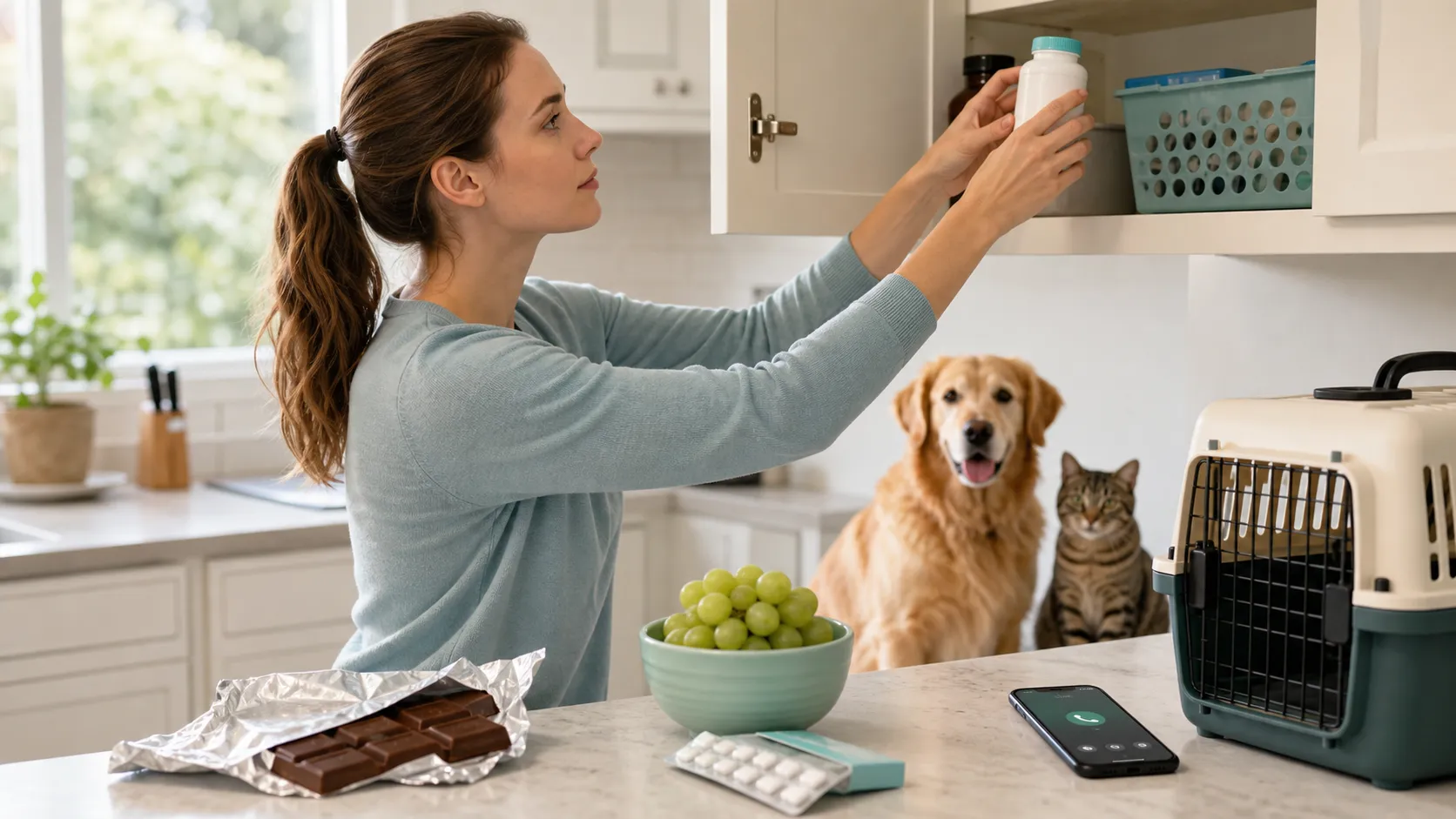
Pet poisoning emergencies often start with a small moment: a dog grabs chocolate from the counter, a cat chews a lily, a pet finds pain medication in a bag, or a piece of sugar-free gum falls on the floor.
The first few minutes can feel chaotic. Is it dangerous? Should you go to the emergency vet? Can you make your pet throw up at home?
It is also one of the pet emergencies that can become expensive quickly. Not because every exposure becomes a disaster, but because panic leads people to wait, search for home fixes, or try the wrong step before calling a professional.
The cost-smart move is not guessing.
It is collecting the right information and getting expert triage fast.
The safest first rule is simple: if your pet may have eaten something toxic, do not rely on internet dose charts or home remedies. Contact your veterinarian, an emergency animal hospital, or a pet poison control service as soon as possible.
ASPCA Animal Poison Control Center data for 2025 listed over-the-counter medications and supplements as the top toxin category, representing 16.9% of exposure calls. ASPCA also reported that its poison control center handled more than 376,000 pet exposure consultations that year. Source: ASPCA: The Top 10 Toxins of 2025
This is not a rare internet story. It is a common household risk.
Step 1: Separate the Pet From the Hazard
First, prevent more exposure. Put away the remaining chocolate, medication bottle, grapes, gum, cleaning product, plant, wrapper, or packaging. Move it somewhere your pet cannot reach.
If you have multiple pets, separate them. Try to identify which pet ate the item, how much may be missing, and when it happened. Multi-pet homes are especially tricky because you may find a damaged package without knowing who ate it.
If something is still in your pet's mouth, be careful. Do not force your hand into a panicked dog's mouth and risk being bitten. Stay calm and try to trade or remove the item only if it is safe.
Step 2: Gather Four Key Details
Before calling a professional, collect as much information as you can.
First, pet information: dog or cat, breed, age, approximate weight, whether your pet is pregnant, and whether they have kidney disease, liver disease, heart disease, seizures, diabetes, or other medical problems.
Second, product information: what exactly was eaten? Keep the original packaging if possible. For medication, check the active ingredient and strength. For chocolate, note whether it was milk chocolate, dark chocolate, or baking chocolate. For gum or candy, check whether it contains xylitol.
Third, estimated amount: how many pieces, tablets, grams, grapes, wrappers, or chewed items are missing? Even an estimate is better than saying "a little."
Fourth, timeline and symptoms: when did it happen, how much time has passed, and has your pet vomited, had diarrhea, drooled, trembled, become weak, had a seizure, walked strangely, or acted confused?
These details help veterinarians and poison control professionals judge risk faster.
Step 3: Do Not Induce Vomiting Unless Told To
Many owners search online and see advice about making a dog vomit. This can be dangerous. Not every toxin should come back up. Corrosive cleaners, sharp objects, petroleum products, and some other substances may cause more harm if vomiting is triggered.
Vomiting can also be risky if a pet is sleepy, seizing, having trouble breathing, unable to swallow normally, or already very weak.
Do not give human pain medicine, stomach medicine, milk, oil, salt water, or home remedies unless a veterinarian or poison control professional specifically tells you to. Many human medications are unsafe for dogs and cats, and cats are especially sensitive to certain drugs.
FDA warns that xylitol is dangerous for dogs and may cause low blood sugar and more serious effects. Xylitol can be found in sugar-free gum, candy, baked goods, toothpaste, and some supplements. Source: FDA: Paws Off Xylitol
Household Items That Deserve Extra Caution
Chocolate. Dark chocolate and baking chocolate are often more concerning, but risk depends on chocolate type, amount eaten, and pet size. Do not assume a small amount is safe without checking.
Grapes and raisins. In dogs, grapes and raisins have been associated with serious kidney problems, and individual sensitivity can vary. This is not a good situation for long at-home observation.
Human pain relievers. Ibuprofen, naproxen, acetaminophen, and similar medications can be dangerous to pets. "One pill is fine for a person" does not translate to dogs or cats.
Xylitol. This sugar substitute is especially dangerous for dogs and may appear in gum, candy, baked goods, toothpaste, and supplements.
Lilies. Lilies are extremely dangerous for cats. Pollen, leaves, petals, and even vase water can be risky. Cat households should avoid lilies entirely.
Cleaning products and pesticides. Risk depends on the exact ingredient, so keep the package and call for guidance.
Rat poison. Different rodenticides work in different ways and require different treatment decisions. Get professional help quickly.
ASPCA Animal Poison Control also advises pet owners to contact a veterinarian or poison control center if they suspect a pet has ingested a potentially poisonous substance. Source: ASPCA Animal Poison Control
When to Go to Emergency Care Now
Do not wait at home if your pet is having seizures, collapsing, struggling to breathe, unable to stand, severely weak, repeatedly vomiting, passing bloody stool, showing severe abdominal pain, unable to urinate, shaking severely, or has abnormal gum color.
You should also move quickly if the exposure involves human medication, rat poison, xylitol, lilies, cleaners, pesticides, or an unknown substance.
When you go to the emergency vet, bring the package, remaining product, photos, your pet's weight, and the timeline. "My dog ate something bad" is less useful than "my 25-pound dog may have eaten two tablets about 40 minutes ago."
How to Prevent Pet Poisoning at Home
Pet poisoning prevention works best when you treat risky items the way you would in a home with a toddler.
Do not leave medication, supplements, vitamins, skincare products, or pain relievers on nightstands, coffee tables, counters, or inside open bags.
Store chocolate, raisins, grapes, sugar-free candy, gum, and baking ingredients in cabinets.
Avoid lilies in homes with cats.
Use covered trash cans, especially in kitchens and bathrooms.
Keep cleaners, pesticides, and garage chemicals high up or locked away.
Make sure family members and guests know not to feed pets random human food or leave pills, candy, or gum within reach.
Bottom Line
If your dog ate chocolate, grapes, pain medication, xylitol gum, or your cat chewed a lily, the goal is not to decide on your own that everything is fine. The goal is to act quickly and give professionals the information they need.
The basic pet poisoning plan is: separate the pet from the hazard, save the packaging, record the pet's weight, estimate the amount and time, do not induce vomiting unless told to, do not give human medication, and contact a veterinarian, emergency hospital, or pet poison control service.
Fast action can reduce risk, reduce uncertainty, and sometimes reduce the cost of care.
This article is for general pet safety information only. It is not veterinary diagnosis or treatment advice. If your pet may have eaten medication, toxins, chocolate, grapes, xylitol, lilies, cleaners, or has seizures, breathing difficulty, repeated vomiting, collapse, severe weakness, or other concerning symptoms, contact a veterinarian, emergency animal hospital, or pet poison control service immediately.
Related Financial Decisions
Keep using the same cash-flow lens on related decisions.
Are Smart Pet Devices Worth It? Smart Litter Boxes, Pet Cameras, GPS Collars, and Cost-Smart Choices
Smart litter boxes, pet cameras, GPS collars, feeders, and fountains can be useful, but they are not right for every household. Learn how to weigh health signals, privacy, subscriptions, maintenance, and veterinary limits before buying.
petIs Bad Breath Normal in Dogs and Cats? Pet Dental Care and Cleaning Costs
Bad breath in dogs and cats may point to plaque, tartar, gingivitis, periodontal disease, pain, or infection. Learn how brushing, VOHC products, anesthesia dental cleanings, and cost estimates fit together.
petHow to Choose Dog and Cat Food Without Overpaying: AAFCO and Label Basics
Pet food prices and marketing claims can be overwhelming. Learn how to read AAFCO statements, complete and balanced claims, life stages, calories, feeding directions, treats, toppers, and veterinary diets before paying more.
SmartLiving Tools
Keep running the numbers with free practical tools.