Cat Peeing Outside the Litter Box? Avoid a Missed Emergency and Costly Cleanup
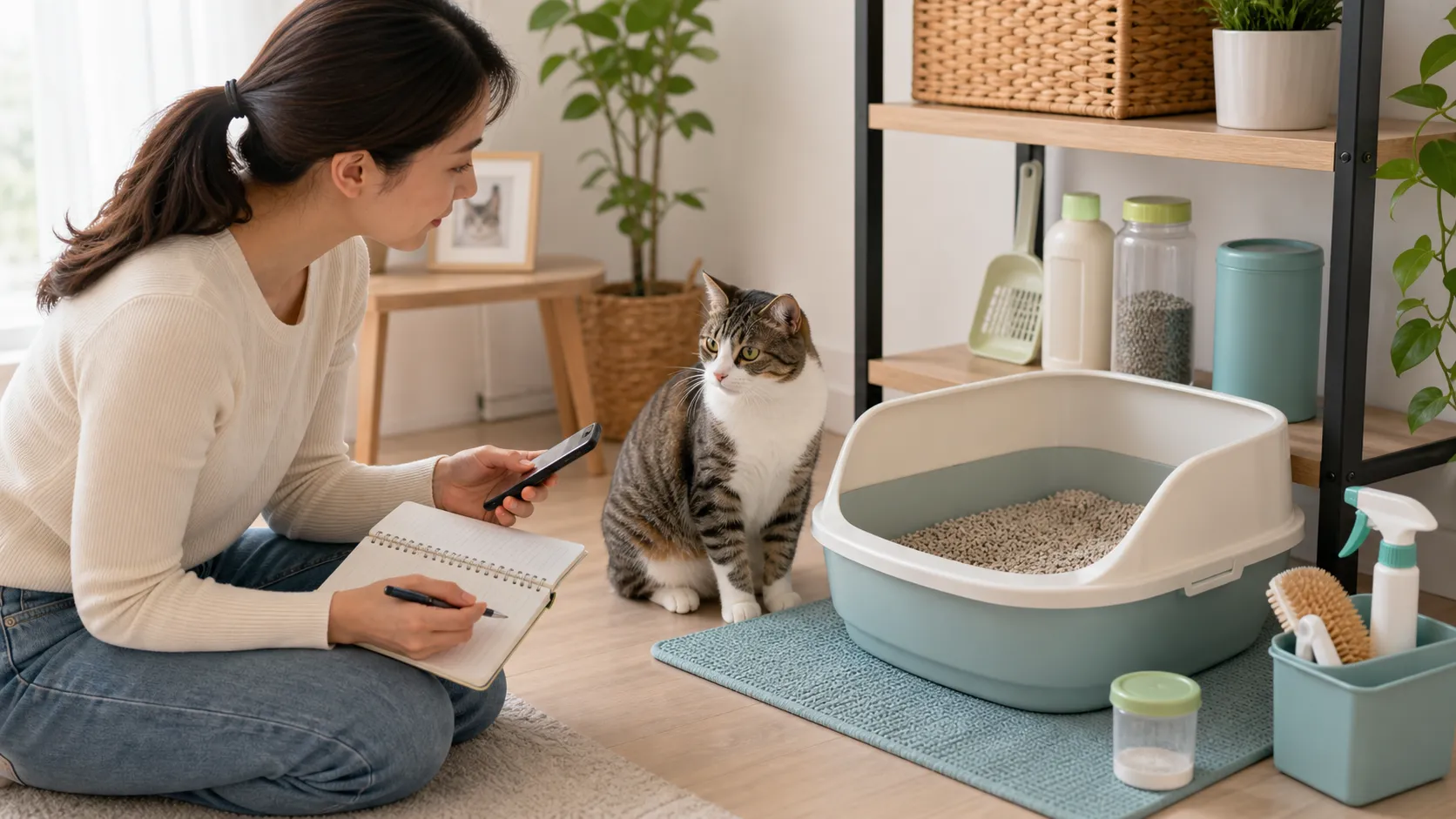
Few things frustrate cat owners more than finding urine on the bed, sofa, carpet, clothes, or near the door. It is tempting to think, "Is my cat doing this to punish me?"
From a household budget angle, though, this is not only a cleaning problem. A delayed urinary emergency can become an expensive vet bill. A wrong first guess can also mean buying litter, cleaners, and extra boxes before discovering the problem needed medical care all along.
So this guide is not about buying everything at once.
It is about getting the order right.
In most cases, no. A cat peeing outside the litter box is usually not revenge. It is a signal that something is wrong with health, litter box setup, stress, or the home environment.
Cornell Feline Health Center explains that feline house-soiling may be related to medical problems, litter box setup, stress, environmental change, and other factors. Cornell also emphasizes the importance of ruling out medical causes before treating the issue as purely behavioral. Source: Cornell Feline Health Center: House Soiling
That means the first step is not scolding your cat or changing every litter product overnight. The first step is to ask whether this could be a urinary health problem.
First: Watch for Emergency Signs
If your cat is repeatedly going in and out of the litter box, straining, producing little or no urine, crying, licking the urinary area, acting weak, vomiting, or seeming painful, especially if the cat is male, this may be an emergency.
Urinary obstruction in cats can be life-threatening. Cornell lists urethral obstruction as a situation that requires urgent veterinary care because blockage can lead to toxin buildup and serious consequences. Source: Cornell Feline Health Center: Feline Lower Urinary Tract Disease
Do not wait until tomorrow to see if your cat "figures it out." Contact a veterinarian or emergency animal hospital right away.
If your cat is still urinating but has started going outside the box, schedule a veterinary exam soon. Bladder inflammation, urinary tract infection, crystals, stones, kidney disease, diabetes, arthritis, and pain can all change litter box habits.
Look at How Your Cat Is Peeing
Not all urine problems look the same.
If your cat squats and leaves a larger puddle, it may be a urination issue. The cat may dislike the box, feel pain, feel urgency, or avoid the box because of stress or a medical problem.
If your cat stands, lifts the tail, shakes the tail, and sprays a small amount on a wall, door, furniture side, or vertical surface, that may be urine marking. Stress, territory pressure, outdoor cats near windows, moving, a new pet, new furniture, or changes in the household can trigger marking.
These problems overlap, but the approach is different. Urination problems require medical and litter box troubleshooting first. Marking often requires stress reduction, territory management, and better resource distribution.
Litter Box Count: Use the "Number of Cats Plus One" Rule
Many homes simply do not have enough litter boxes. AAHA's feline-friendly home guidance recommends at least one litter box per cat, plus one extra, and the boxes should be placed in different areas. Source: AAHA: Feline Friendly Home
One cat should usually have at least two boxes. Two cats should usually have at least three. The boxes should not all be lined up in the same corner. To a cat, three boxes side by side may still feel like one bathroom zone.
Choose quiet, accessible locations. Avoid placing the box next to loud machines, in busy dog traffic areas, in tight corners, or in spots where one cat can block another cat's access.
For senior cats or cats with arthritis, the box should be easy to enter. A high-sided box may be fine for a young cat but uncomfortable for an older or overweight cat.
Litter and Cleaning: Do Not Change Everything at Once
Cats can be very particular about litter. Many prefer unscented, fine-grain litter with a stable feel under their paws. Strong fragrance, dust, rough texture, or a dirty box can all make a cat avoid it.
If you recently changed the litter type, box style, location, or cleaning product, the timing matters. Instead of replacing everything at once, keep one familiar box and add one new option nearby. Let the cat choose.
Cleaning also matters. Use an enzymatic pet cleaner on soiled areas. Regular cleaners may make the smell disappear to humans, but not always to cats. If the odor remains, the cat may return to the same spot.
Avoid harsh scents, punishment, or scare tactics. These can increase stress and make the problem spread.
Multi-Cat Homes: Silent Conflict Counts
In multi-cat homes, litter box problems are often resource problems.
Cats may not have obvious fights, but one cat may block a hallway, stare, chase, or guard access to the litter box. If another cat feels unsafe using the box, accidents can follow.
Litter boxes are not the only resource. Food bowls, water stations, resting areas, scratching surfaces, high spaces, hiding spots, and safe routes all matter. Cats need ways to avoid each other and still reach food, water, rest, and litter boxes.
If the problem started after a new cat, move, renovation, baby, guests, new furniture, or outdoor cats appearing near windows, stress should be part of your investigation.
A Practical Troubleshooting Order
First, check for emergency signs. Straining, no urine, crying, vomiting, weakness, or obvious pain should trigger urgent veterinary care.
Second, schedule a veterinary exam to rule out urinary disease, kidney disease, diabetes, pain, or other medical causes.
Third, record where the urine appears, when it happens, how much there is, and whether your cat squats or sprays.
Fourth, increase litter boxes to "number of cats plus one" and place them in separate areas.
Fifth, keep boxes clean, use unscented litter when possible, and avoid sudden major changes.
Sixth, clean soiled areas with an enzymatic cleaner.
Seventh, look for multi-cat pressure or recent changes at home.
Eighth, if medical causes are ruled out and the issue continues, consider a veterinary behaviorist or qualified cat behavior consultant.
Bottom Line
A cat peeing outside the litter box is not simply bad behavior, and punishment is not the answer. It may be a sign of urinary disease, pain, poor litter box setup, stress, or conflict with other cats.
The safest order is: rule out emergency and medical causes first, then improve litter box number, location, litter type, cleaning, and environmental stress.
The earlier you identify the cause, the easier it is to protect your cat's health and restore peace at home.
This article is for general cat care information only. It is not veterinary diagnosis or treatment advice. If your cat is unable to urinate, repeatedly enters the litter box, cries in pain, vomits, acts weak, shows obvious pain, or has blood in the urine, contact a veterinarian or emergency animal hospital immediately.
Related Financial Decisions
Keep using the same cash-flow lens on related decisions.
Are Smart Pet Devices Worth It? Smart Litter Boxes, Pet Cameras, GPS Collars, and Cost-Smart Choices
Smart litter boxes, pet cameras, GPS collars, feeders, and fountains can be useful, but they are not right for every household. Learn how to weigh health signals, privacy, subscriptions, maintenance, and veterinary limits before buying.
petIs Bad Breath Normal in Dogs and Cats? Pet Dental Care and Cleaning Costs
Bad breath in dogs and cats may point to plaque, tartar, gingivitis, periodontal disease, pain, or infection. Learn how brushing, VOHC products, anesthesia dental cleanings, and cost estimates fit together.
petHow to Choose Dog and Cat Food Without Overpaying: AAFCO and Label Basics
Pet food prices and marketing claims can be overwhelming. Learn how to read AAFCO statements, complete and balanced claims, life stages, calories, feeding directions, treats, toppers, and veterinary diets before paying more.
SmartLiving Tools
Keep running the numbers with free practical tools.